
Safe Postpartum Recovery in St. Albert: Why Rushing Strength Can Backfire
Safe Postpartum Recovery in St. Albert: Why Rushing Core Strength Can Backfire
Hormonal transitions change how the body responds to stress and strength training. For many women, the first major shift happens postpartum.
In St. Albert, postpartum recovery is often framed as something to “finish” quickly. Six weeks pass, and women in St. Albert and Edmonton feel pressure to return to workouts, flatten their stomachs, or “bounce back.”
But the body does not operate on a deadline.
Postpartum recovery across St. Albert and the greater Edmonton area unfolds differently for every woman. Rushing core strength — especially when pelvic stability and abdominal coordination haven’t fully returned — can create frustration, compensation patterns, or setbacks.
For many women in St. Albert, the issue isn’t effort.
It’s sequencing.
Rebuilding strength during any hormonal transition — including postpartum — requires restoring communication before adding load.
Supportive approaches prioritize:
Rebuilding trust with the body
Restoring muscle coordination before intensity
Reconnecting deeper stabilizing muscles
Allowing strength to return progressively
When deeper activation hasn’t fully re-established, jumping into traditional workouts can increase abdominal pressure rather than improve stability. This is frequently seen in postpartum women throughout Edmonton and St. Albert who feel like exercise simply “isn’t working” the way it once did.
The same principle applies later in life. During perimenopause and menopause, muscle coordination and stress tolerance shift again. Pushing harder isn’t always the answer. Foundation comes first.
Removing pressure changes the outcome.
Sustainable postpartum recovery in St. Albert focuses on restoring foundational support before layering intensity. When the core and pelvic floor regain coordination, strength becomes more accessible — and movement feels steady rather than forced.
At Corehauss in St. Albert, strength rebuilding is approached with structure and patience. Non-invasive Eurowave muscle activation is used to assist deeper engagement while the body regains coordination at its own pace.
For women in St. Albert and nearby Edmonton, this provides a steadier path forward — one that respects adaptation rather than rushing it.
Your body doesn’t need to be pushed through transition.
It needs the right support at the right stage.
If you’re in St. Albert or the greater Edmonton area and unsure how to safely rebuild strength after pregnancy, your first session at Corehauss includes intake, measurements, and guided muscle activation to assess where your coordination and stability currently stand.
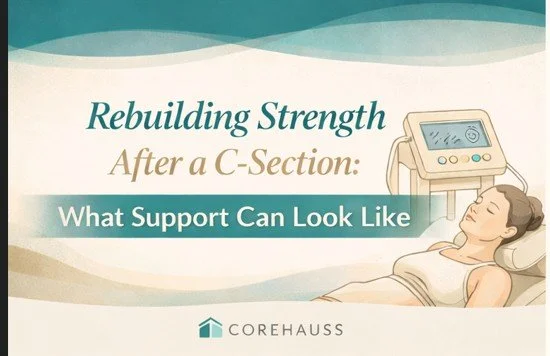
C-Section Recovery Support in St. Albert & Edmonton
C-Section Recovery Support in St. Albert & Edmonton
C-Section Recovery Support in St. Albert: Rebuilding Strength After Surgical Birth
Hormonal transitions don’t begin in midlife. For many women, the first major shift happens during pregnancy and surgical birth.
Postpartum core support in St. Albert is not about rushing back into workouts — especially after a C-section. For women in St. Albert and the greater Edmonton area, rebuilding strength after surgical delivery requires a different approach than simply “getting back to exercise.”
A C-section is a significant physical event — even long after the incision has healed.
Many women in St. Albert describe lingering sensations such as:
Weakness through the abdomen
Altered sensation or numbness around the incision
Difficulty reconnecting with deep core engagement
A sense that traditional exercise doesn’t “reach” the right muscles
This is not a failure of effort.
It is a natural result of how the body adapts to surgical intervention.
When abdominal layers are disrupted, communication between the nervous system and deeper stabilizing muscles can become less efficient. For women across Edmonton and St. Albert, this often shows up months later as instability, doming, or persistent weakness despite consistent workouts.
Rebuilding strength after a C-section in St. Albert benefits from sequencing rather than intensity.
That means prioritizing:
Awareness before load
Structured muscle activation
Tissue support
Gradual re-coordination of deeper stabilizers
Rather than adding pressure through high-intensity core exercises, a foundation-first approach allows the body to rebuild confidence and stability over time.
This principle applies not only postpartum but across all hormonal transitions. When the body experiences change — whether after pregnancy or later in perimenopause — muscle coordination shifts. Pushing harder is rarely the answer. Reconnection comes first.
At Corehauss in St. Albert, non-invasive Eurowave muscle activation is used to support deeper core engagement while coordination is restored. The goal is not to replace movement — it is to help rebuild the communication that makes movement feel stable and supported again.
For women in St. Albert and nearby Edmonton, this provides a structured pathway to regain strength without strain, pressure, or rushing the process.
If your body feels different after a C-section — even months or years later — rebuilding strength may begin with restoring connection.
If you’re in St. Albert or the greater Edmonton area and looking for C-section core support, your first session at Corehauss includes a detailed intake, baseline measurements, and guided muscle activation to assess where your strength currently stands.
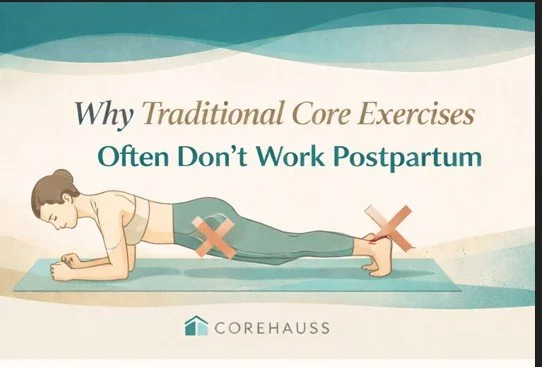
Postpartum Core Recovery in St. Albert: Why Crunches Can Make It Worse
Why Traditional Core Exercises Often Don’t Work Postpartum
Many women in St. Albert assume that returning to traditional core workouts will restore strength quickly after having a baby. Crunches, planks, and online postpartum programs seem like the logical next step. Unfortunately, for many postpartum women in St. Albert, this approach often leads to frustration, increased abdominal pressure, or a feeling that something just isn’t connecting.
And it’s not because you’re not trying hard enough.
After pregnancy, the body doesn’t just need “stronger” muscles — it needs restored muscle activation patterns.
If deep stabilizing muscles have not re-engaged properly, adding intensity can actually reinforce compensation rather than true strength. This is something many women in both St. Albert and Edmonton experience when they jump back into exercise too quickly.
Traditional core exercises may:
Overuse surrounding muscles like hip flexors or superficial abdominals
Increase intra-abdominal pressure before stability is established
Create doming or pulling sensations through the midline
Feel frustrating or ineffective despite consistent effort
In postpartum recovery across St. Albert, we often see women doing “all the right things” but still feeling unstable, weak, or disconnected through the core.
This doesn’t mean exercise is wrong.
It means timing and support matter.
Before intensity, the body benefits from re-establishing connection to deeper stabilizing muscles — including the transverse abdominis and pelvic floor. Without that foundation, movement can feel strained instead of supportive.
For women in Edmonton and St. Albert looking for postpartum core recovery, the missing layer is often muscle activation — not more repetitions.
At Corehauss in St. Albert, the goal isn’t to replace movement or traditional exercise. It’s to support the foundation that makes movement feel safer and more effective again. By restoring deeper muscle engagement first, women are better prepared to return to strength training, functional workouts, or gym programs with confidence.
Whether you’re newly postpartum or months into recovery in St. Albert or nearby Edmonton, it’s important to remember:
Support comes before strength.
If exercise hasn’t felt right since pregnancy, there may be another layer worth addressing first — one that focuses on connection before intensity, and stability before strain.
If you’re in St. Albert or Edmonton and feel disconnected from your core after pregnancy, your first Eurowave session at Corehauss includes intake, measurements, and targeted muscle activation — so you can understand what’s actually happening beneath the surface.
Why Your Core Can Feel Disconnected After Pregnancy
Why Your Core Can Feel Disconnected After Pregnancy
Many women describe the same feeling after pregnancy:
“I know my muscles are there — but I can’t feel them working the same way.”
This sense of disconnection is incredibly common and often misunderstood.
Pregnancy changes how the core muscles coordinate and respond. As the body adapts to carrying and delivering a baby, the deep abdominal muscles, pelvic floor, and surrounding tissue experience prolonged stretch and altered activation patterns.
After birth — whether vaginal or via C-section — the body doesn’t automatically return to its previous patterns of engagement. Even when healing is complete, muscle communication may remain inconsistent.
This is why many women feel:
weaker through the middle
less stable when lifting or moving
unsure how to “engage their core”
It’s not a lack of effort.
It’s a need for support and re-education, not force.
At Corehauss, the focus is on gently supporting muscle activation and awareness — helping the body relearn connection rather than pushing it into strain.
If your core feels unfamiliar after pregnancy, a consultation can help determine whether supportive muscle activation may be beneficial for you.
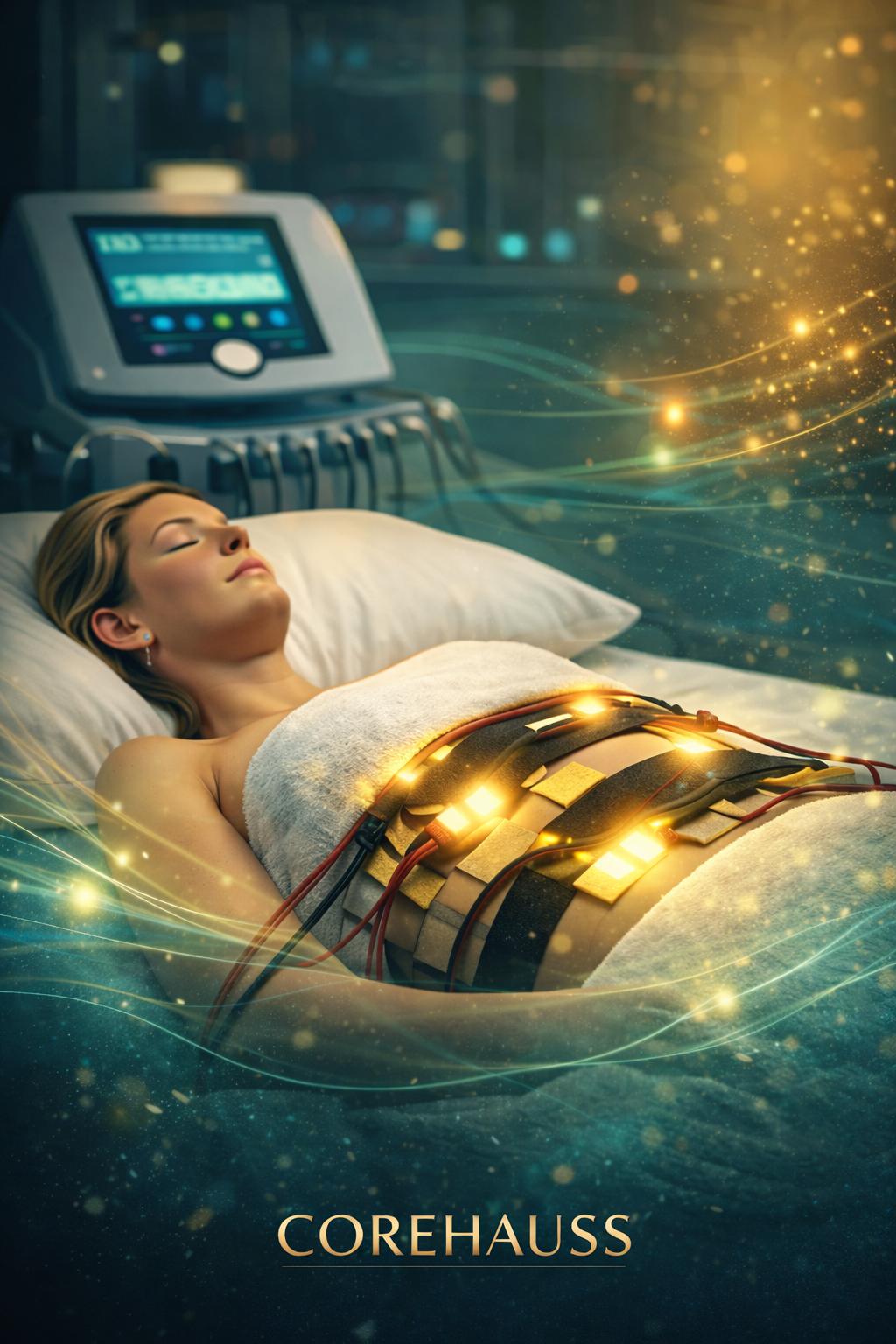
What to Expect From Your First Eurowave Session
A first Eurowave session is designed to support the body gently. Muscle activation feels rhythmic and controlled, helping the body reconnect without strain.
Trying something new can feel uncertain — especially when it involves your body.
A first Eurowave session isn’t about pushing, proving, or fixing.
It’s about supporting your body and understanding how it responds.
Before the Session
Your session begins with:
a brief conversation
discussion of goals
explanation of what Eurowave does and doesn’t do
No pressure. No assumptions.
During the Session
You’ll experience:
rhythmic muscle activation
gentle contractions
a feeling of engagement without strain
Many people describe it as:
calming
grounding
surprisingly comfortable
After the Session
Common early responses include:
feeling tighter
feeling lighter
improved body awareness
increased connection to core muscles
Results build with consistency.
The Takeaway
Your first session is about learning how your body responds — not forcing change.
Support comes first.
Adaptation follows.
Many women come to their first session after pregnancy, during hormonal shifts, or after periods of body change — and have similar questions about what to expect.
👉 Learn more about Eurowave sessions at Corehauss

Supporting Strength When Appetite Is Lower
Strength and body composition look different on every body. Supporting muscle activation helps the body adapt with confidence during periods of change.
Strength isn’t just built in the gym.
It’s maintained through consistent signals to the body.
When appetite is lower — whether due to lifestyle changes, stress, or intentional weight loss — the body often receives fewer signals to maintain muscle engagement.
This is when many people notice:
weakness
softness
fatigue
reduced stamina
These changes are common, not personal failures.
Why Lower Appetite Affects Strength
When intake decreases:
total movement often decreases
resistance stimulation drops
muscle activation signals reduce
The body adapts by conserving energy.
This is efficient biology — not something to fight aggressively.
Why Forcing Intensity Often Backfires
When strength feels diminished, many people try to:
train harder
push through fatigue
increase intensity
But when energy availability is lower, aggressive strategies can:
increase stress
reduce recovery
worsen tissue responsiveness
The body responds better to support, not force.
Gentle Activation Makes a Difference
Supporting strength during low-appetite phases often looks like:
low-stress muscle activation
consistent stimulation
shorter, focused sessions
attention to recovery
This keeps muscles “online” without draining resources.
Where Eurowave Fits
Eurowave is used to support:
muscle activation without exhaustion
tissue engagement during transitions
structural awareness
It doesn’t replace nutrition or medical care.
It supports the physical structure of the body while it adapts.
The Takeaway
Strength isn’t lost overnight.
It fades when signals disappear.
Supporting activation — gently and consistently — helps preserve strength even when appetite or energy is lower.