

Why Most Women Struggle With Core Strength (And How One Client Increased Hers by 237%)
If you’ve ever felt like your core is weak no matter how much you work out, you’re not alone.
This is one of the most common frustrations I hear from women—especially in their 40s and beyond.
They’re doing the workouts.
They’re putting in the effort.
But something isn’t translating.
Recently, I worked with a client who came in with this exact concern.
When we tested her plank hold, she lasted 16 seconds.
By the end of her sessions, she held for 54 seconds.
That’s a 237% increase in core strength.
So what changed?
It Wasn’t More Effort
She didn’t suddenly start doing intense workouts or pushing harder.
In fact, we did the opposite.
We focused on targeted activation of the deep core muscles—the ones that actually support posture, stability, and strength.
The Real Problem: Disconnection
Most women don’t have a weak core.
They have a disconnected one.
Years of:
– Sitting
– Improper training
– Hormonal changes
– Stress and fatigue
All contribute to the body “losing access” to those deeper muscle layers.
So even when you train, you’re not getting the full benefit.
Why This Matters
Your core is responsible for more than just aesthetics.
It affects:
– Posture
– Stability
– Back pain
– Confidence in movement
– Overall strength
When it’s not functioning properly, everything feels harder.
A Different Approach
At Corehauss, the goal isn’t to exhaust you.
It’s to reconnect your body.
Using Eurowave Faradic Wave technology, we target deep muscle layers in a way that traditional workouts often miss.
The result?
Faster improvements in strength, stability, and body awareness.
What This Means for You
If you’ve been:
– Working out with little progress
– Feeling weaker through your midsection
– Struggling with consistency because nothing is working
It might not be your effort.
It might be your approach.
And that’s something we can fix.
If you’re ready to feel stronger, more supported, and more connected to your body…
Start with a trial session.
📍 Corehauss Body Studio
➡️ Book your $79 trial
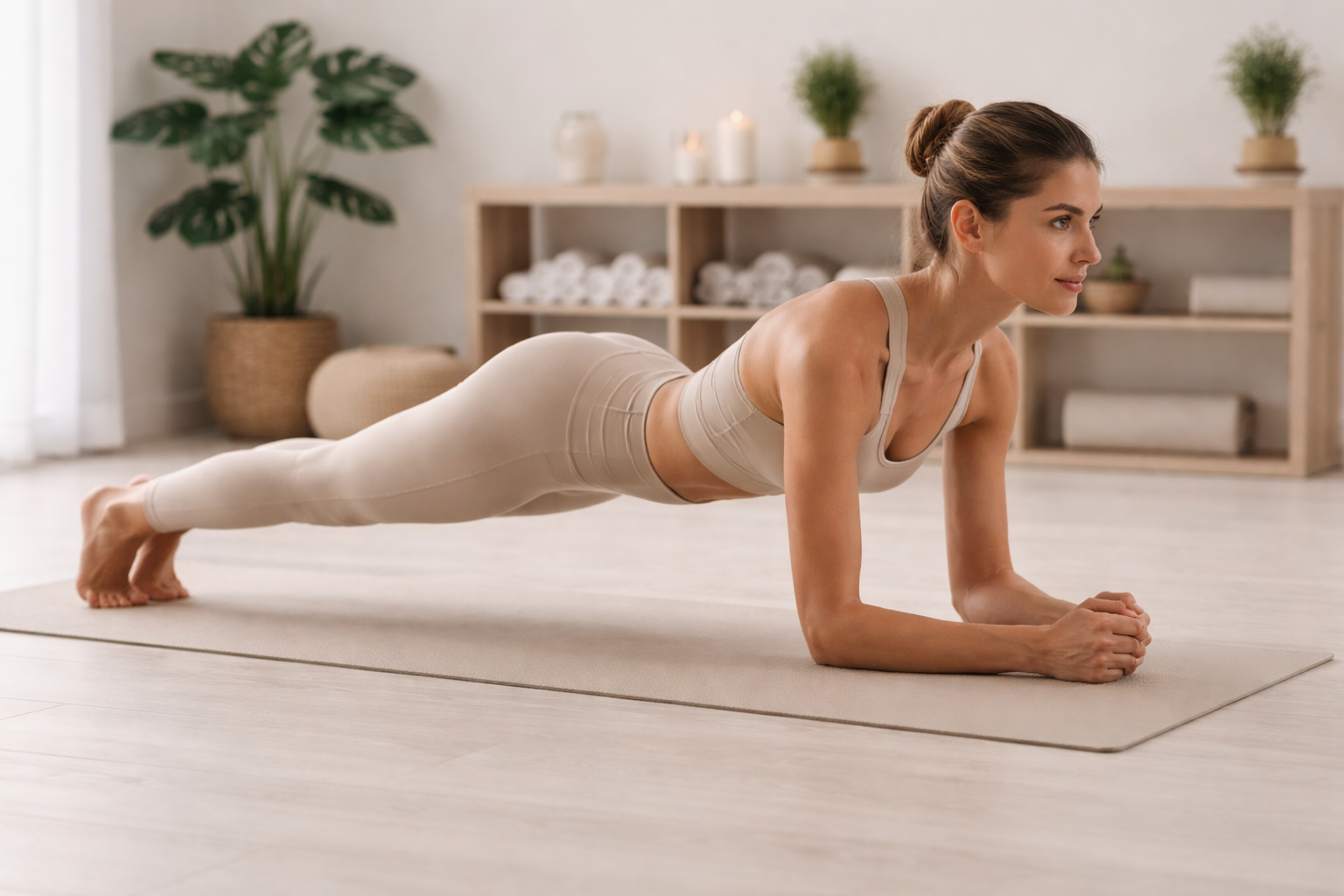
Why Core Stability Matters More Than Core Exercises
Corehauss offers EMS-based core strength training in St. Albert, serving Edmonton and surrounding communities.
Many people think strengthening the core means doing more exercises.
More crunches.
More planks.
More intensity.
But core strength is not built through effort alone.
It is built through stability and coordination.
What Is Core Stability?
Core stability refers to the ability of the midsection to support the spine and maintain control during movement.
It involves deeper stabilizing muscles — not just the surface muscles most people associate with “abs.”
When these deeper muscles are not engaging effectively, the body compensates.
Why More Exercises Don’t Always Work
If the core is not coordinating properly, adding more intensity can increase pressure rather than improve stability.
This is why many women say:
“I’m working my core, but it doesn’t feel stronger.”
The issue is not effort.
It is engagement.
The Role of the Midsection
The midsection connects the upper and lower body.
Every movement passes through it.
If it is unstable, the body distributes load inefficiently.
This can lead to:
• Back strain
• Postural changes
• Reduced strength transfer
Reinforcing Stability
Strengthening the core begins with reinforcing how the muscles engage.
At Corehauss, EMS is used to provide structured activation of the midsection, helping reinforce the muscles responsible for stability.
This allows strength to build from a more stable foundation.
A Different Approach to Strength
Instead of focusing on more exercises, the focus shifts to:
• Better engagement
• Better control
• Better support
Because real strength is not just about movement.
It is about how well the body stabilizes during movement.
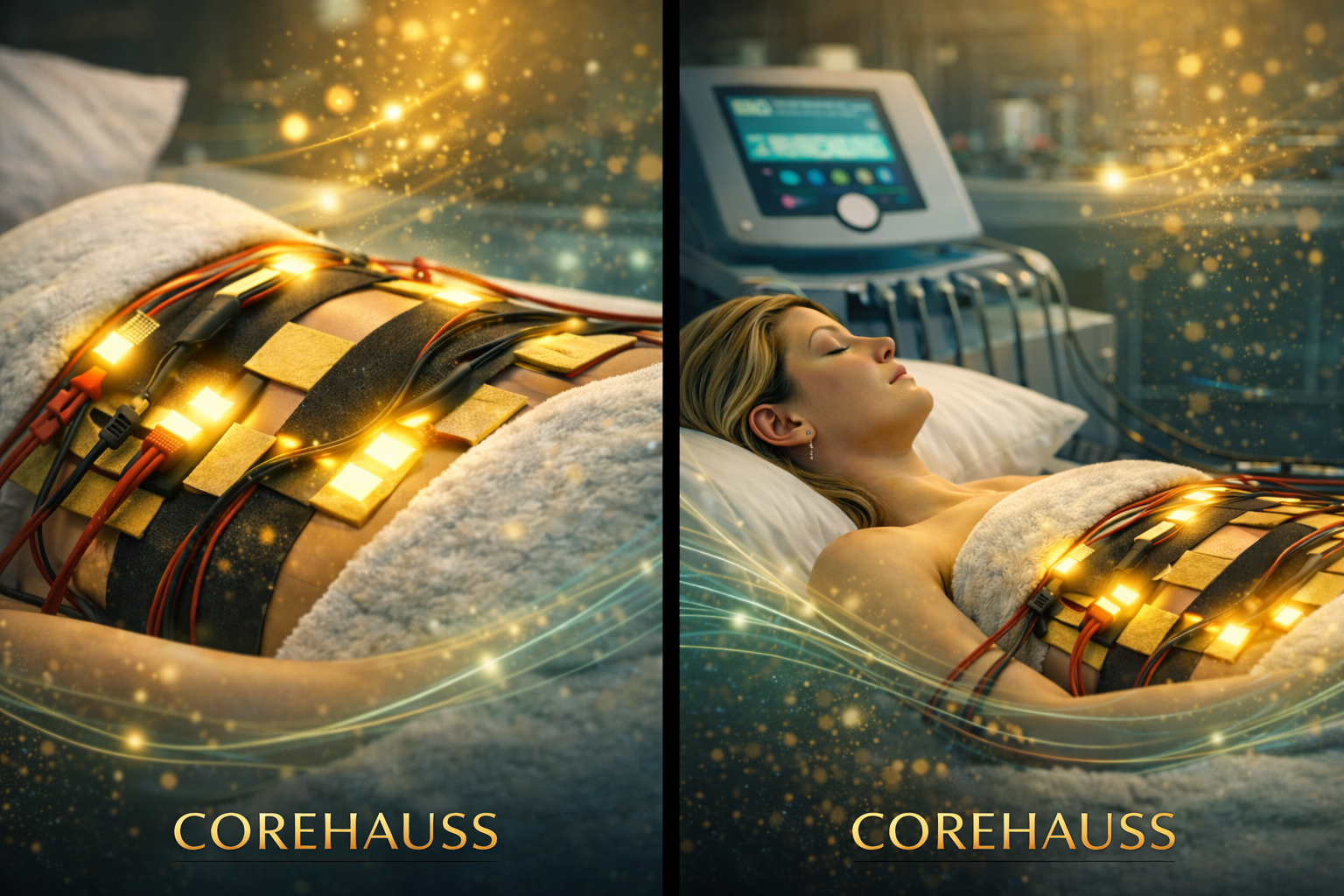
What Is EMS Core Training and How Does It Strengthen the Midsection?
Electrical Muscle Stimulation (EMS) is often misunderstood.
Many people associate it with outdated “ab toning” devices from decades ago. But modern EMS, when applied properly, is a structured method of reinforcing muscle activation — especially in the midsection.
At Corehauss, EMS is used specifically for core strength and stability.
How EMS Works
EMS delivers controlled electrical impulses to targeted muscle groups. These impulses trigger muscle contractions — the same type of contraction your body creates naturally through the nervous system.
The difference is repetition and precision.
With EMS, the midsection muscles can be activated in a consistent, structured way that reinforces engagement over time.
Why the Core Matters
The core is not just about appearance.
It is your body’s stabilizing system.
A strong midsection supports:
• Posture
• Spinal alignment
• Efficient movement
• Reduced strain on the back
When the core is not engaging properly, other parts of the body compensate.
This is where many women begin to feel:
• Back tension
• Poor posture
• Midsection weakness
EMS and Core Strength
EMS helps reinforce the connection between the nervous system and the muscles responsible for stabilizing the midsection.
Through repeated contractions, the muscles are reminded how to engage effectively.
This is not a replacement for movement.
It is a reinforcement of the foundation that supports movement.
The Corehauss Approach
At Corehauss in St. Albert, EMS is used intentionally to support midsection stability.
The goal is not cosmetic change.
The goal is stronger, more stable core function.
When the center is strong, everything else organizes around it.