

Your Habits Don't Create Your Identity
Your habits don’t create your identity, your identity creates your habits.
Your Identity Creates Your Habits.
Most women have been taught that if they could only become more disciplined...
...they would finally lose the weight.
If they could just eat better.
Exercise harder.
Stop emotional eating.
Be more motivated.
Then everything would change.
But after coaching women—and living through my own journey—I don't believe that's where transformation begins.
It begins much deeper.
It begins with identity.
We Have It Backwards
Think about how most people try to change.
They decide they want to lose 30 pounds.
So they buy healthier groceries.
Join a gym.
Download another calorie tracker.
Promise themselves that this Monday will be different.
For a few weeks they stay motivated.
Then life happens.
Stress returns.
Old habits creep back in.
The weight comes back.
Not because they failed...
Because they were trying to build new habits while still believing they were the same person.
Your Brain Always Tries To Stay Consistent
Your subconscious loves consistency.
If deep down your identity says...
"I'm overweight."
"I've always struggled."
"I'm not athletic."
"I have no willpower."
"I always quit."
Then your brain will quietly steer your actions back toward proving those beliefs true.
Not because you're broken.
Because your identity always wins.
Your habits are simply evidence of who you believe you are.
Every Choice Is An Identity Vote
James Clear talks about this beautifully in Atomic Habits.
Every action is a vote for the person you're becoming.
I like to take it one step further.
Every action is also evidence for the identity you're already practicing.
You don't eat healthy because you're disciplined.
You eat healthy because you're becoming someone who values her health.
You don't go for a walk because you're forcing yourself.
You go because that's what a healthy woman naturally does.
Healthy choices become easier when they match who you believe you are.
This Is Why Diets Fail
Diets focus almost entirely on behavior.
Calories.
Macros.
Meal plans.
Rules.
Restrictions.
But very few ever ask the question:
Who does this woman believe she is?
Because until that changes...
Nothing truly changes.
Identity Before Habits
Inside the Corehauss Metabolic Reset, this is where we begin.
Before we talk about protein...
Before fasting...
Before weighted walks...
Before strength training...
We build your future identity.
We design your future self.
The woman who:
Wakes up with energy.
Loves moving her body.
Eats in a way that nourishes her.
Feels strong.
Thinks clearly.
Trusts herself.
Keeps promises to herself.
Doesn't need motivation because this is simply who she is.
Once that identity becomes familiar...
The habits stop feeling forced.
They become natural.
Ask Yourself This Today
Instead of asking:
"What should I eat today?"
Try asking:
"What would the healthiest version of me choose?"
Instead of asking:
"Do I feel like exercising?"
Ask:
"What would the woman I'm becoming do today?"
One question comes from your current identity.
The other comes from your future one.
Guess which one changes your life.
Lasting Change Starts Here
You don't become healthy because you lose weight.
You lose weight because you've become someone who consistently makes healthy choices.
Identity comes first.
Habits follow.
And when your habits finally match who you believe you are...
Change stops feeling like hard work.
It simply becomes who you are.
Your Corehauss Challenge This Week
Take five minutes today and write one sentence.
"I am the woman who..."
Finish that sentence as if you're already living the life you want.
Maybe it's:
I am the woman who fuels her body with real food.
I am the woman who enjoys movement every day.
I am the woman who keeps promises to herself.
I am the woman who is metabolically healthy, strong, and full of energy.
Then tomorrow...
Act like her.
Not perfectly.
Just once.
Because every choice is another vote for the woman you're becoming.
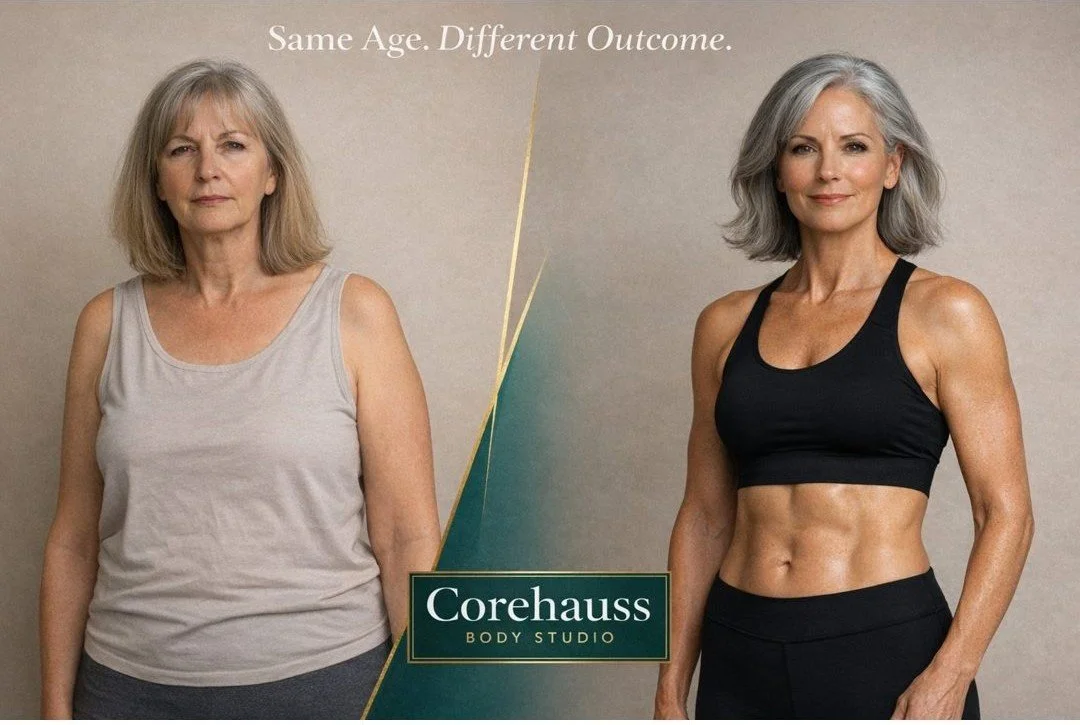
Train For Longevity, Not Just Weight Loss
Most fitness marketing focuses on short-term results.
Lose weight fast.
Flatten your stomach.
Get beach ready.
But very few people are asking a more important question:
How do you want to feel 20 years from now?
As women age, maintaining muscle and metabolic health becomes increasingly important for:
mobility
stability
posture
balance
independence
energy levels
healthy aging
Unfortunately, many women are still being sold programs built entirely around appearance.
At Corehauss, I believe women need a more sustainable approach.
One rooted in:
strength
consistency
support
recovery
long-term health
Real wellness is not built in 30 days.
It’s built through daily habits, movement, proper nourishment, nervous system support, and creating a lifestyle that works long after motivation fades.
This is especially important during midlife and menopause, when many women notice significant changes in their body composition, energy, and recovery capacity.
The goal should not simply be to lose weight for summer.
The goal should be building a body that allows you to continue living fully, moving confidently, and aging powerfully for decades to come.
That is true health.
And that is the philosophy behind Corehauss.

Why Women Need To Stop Treating Health Like A Seasonal Emergency
For decades, women have been taught to approach health through urgency.
Every year the same messaging appears:
“Get summer ready.”
“Drop weight fast.”
“Get your body back.”
The problem is that this approach teaches women to associate health with temporary appearance-based deadlines instead of lifelong wellbeing.
At Corehauss, I believe women deserve a different conversation around health.
Because your metabolism matters in every season.
Not just before a vacation.
Not just before a reunion.
Not just when summer arrives.
Many women entering their 40s and 50s are navigating major changes:
declining muscle mass
reduced energy
sleep disruption
increased inflammation
hormonal shifts
insulin resistance
stress overload
These issues are not seasonal.
They are foundational.
That’s why true wellness requires consistency, strength-building, movement, recovery, and long-term metabolic support.
Health is not about punishment.
It is not about panic.
And it is not about becoming smaller for an event.
It’s about creating a body that supports you for the next several decades of your life.
At Corehauss, the focus is helping women reconnect to their strength, improve core function, support metabolism, and feel more confident in their bodies year-round.
Because women deserve better than seasonal wellness culture.
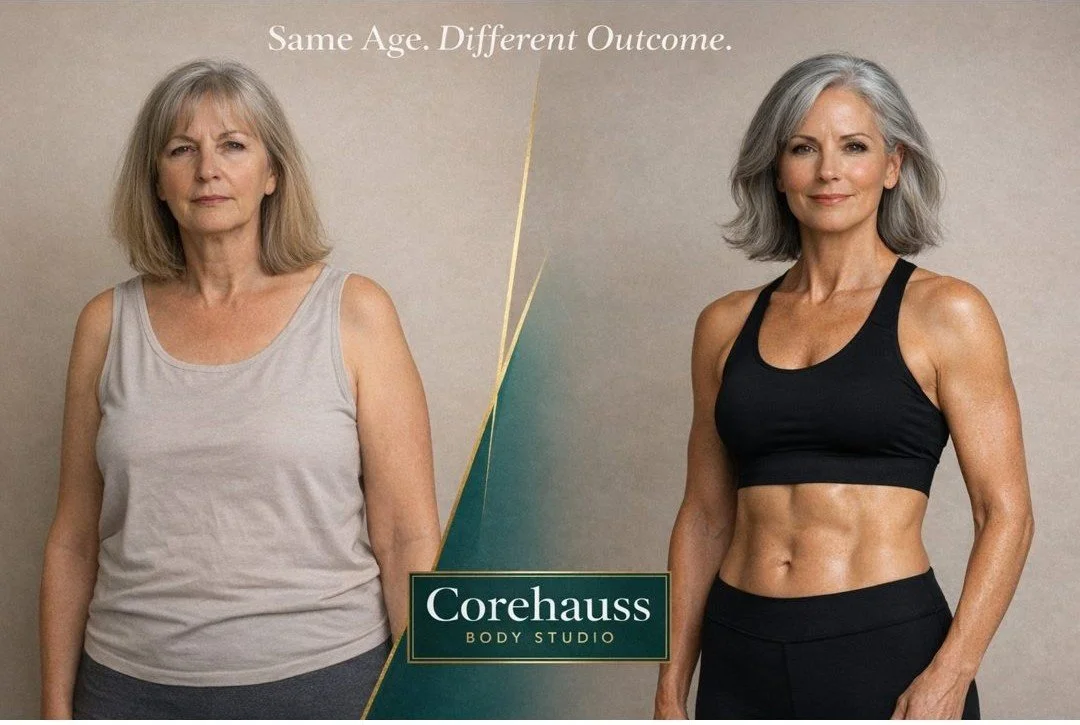
Consistency Over Cost: Why Expensive Body Treatments Don’t Work Without Frequency
Let’s be honest.
You don’t need to spend more money on your body.
You need to stop wasting it on things that aren’t done often enough to work.
After 40, your body changes. Muscle tone can feel harder to maintain. Your core may not feel as strong or connected. Your metabolism may feel slower. Recovery can take longer. And suddenly, the things that used to work don’t seem to move the needle anymore.
So many women start looking for the next solution.
The newest machine.
The most expensive treatment.
The latest body sculpting trend.
The magic appointment that finally “fixes” everything.
But here’s the truth:
Your body does not change from one expensive session.
Your body changes from the right stimulus, repeated consistently.
The Expensive Treatment Trap
A lot of women assume that if something costs more, it must work better.
But expensive does not automatically mean effective.
Many body treatments are sold as occasional appointments. You go once, maybe notice a small difference, then life gets busy. A few weeks pass. Maybe you book again. Maybe you don’t.
And then you wonder why nothing really changes.
That is not failure on your part.
That is a system problem.
Your body is not meant to transform from random, disconnected sessions. It needs repetition. It needs consistency. It needs enough frequency to actually create a response.
Why Consistency Matters More Than Cost
Think about strength training.
You would never go to the gym once and expect your muscles to stay stronger forever.
You would never eat well for one day and expect your metabolism to completely change.
You would never stretch one time and expect lifelong mobility.
The same principle applies here.
The body responds to repeated signals.
When you consistently activate muscle, support circulation, and encourage lymphatic flow, your body has something to build from.
That repeated stimulus matters.
Not the flashiest machine.
Not the fanciest room.
Not the biggest price tag.
Consistency is what creates change.
Smart Women Don’t Chase Trends
At this stage of life, you do not need more hype.
You need what works.
You need something practical, structured, and repeatable. Something that supports your body instead of overwhelming it.
After 40, the goal is not punishment. It is not panic. It is not trying to “get your old body back.”
The goal is to build a stronger, more supported, more capable body now.
That requires a different mindset.
Not quick fixes.
Not random treatments.
Not bouncing from one trend to the next.
It requires a plan.
The Corehauss Difference
At Corehauss Body Studio, we focus on consistency, structure, and progression.
Eurowave Faradic Wave sessions are designed to activate deep muscles, support core engagement, encourage circulation, and assist lymphatic flow.
But the real difference is not just the technology.
It is the way we use it.
Corehauss is not built around one-off appointments.
It is built around structured sessions done consistently enough for your body to respond.
That is why frequency matters.
That is why showing up matters.
That is why this is not about buying results in one appointment.
It is about building them.
Results Are Built, Not Bought
This is the part most women need to hear:
You are not broken.
Your body is not impossible.
You may simply have been using approaches that were never structured properly in the first place.
If you have tried treatments before and felt disappointed, it does not mean you failed. It may mean the process was not consistent enough to create meaningful change.
Your body responds to signals.
Your habits are signals.
Your movement is a signal.
Your food is a signal.
Your recovery is a signal.
Your treatment frequency is a signal.
When those signals become consistent, your body has direction.
That is when change starts to happen.
A Better Way to Start Again
If you have been telling yourself, “I need to get back on track,” this is your sign.
Not to punish yourself.
Not to chase another trend.
Not to spend more money on something that is not done often enough to work.
This is your sign to choose a smarter approach.
One based on consistency.
One based on structure.
One that respects how your body actually changes.
At Corehauss, we help women build strength, support, and shape through consistent, strategic sessions.
Because real results are not bought.
They are built.
Ready to Experience the Difference?
Book your $79 trial at Corehauss Body Studio and see what structured, consistent sessions can feel like in your body.
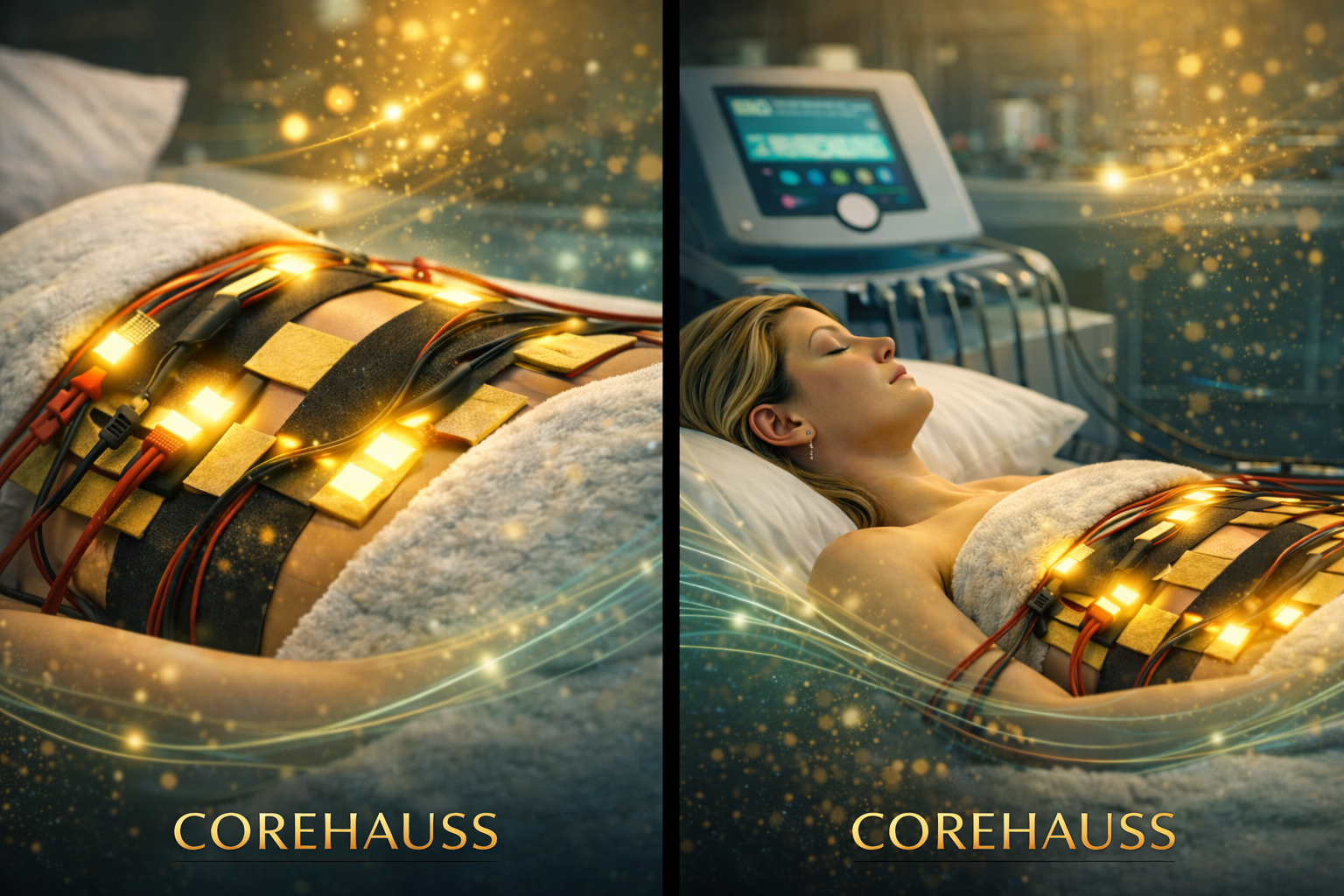
What Is EMS Core Training and How Does It Strengthen the Midsection?
Electrical Muscle Stimulation (EMS) is often misunderstood.
Many people associate it with outdated “ab toning” devices from decades ago. But modern EMS, when applied properly, is a structured method of reinforcing muscle activation — especially in the midsection.
At Corehauss, EMS is used specifically for core strength and stability.
How EMS Works
EMS delivers controlled electrical impulses to targeted muscle groups. These impulses trigger muscle contractions — the same type of contraction your body creates naturally through the nervous system.
The difference is repetition and precision.
With EMS, the midsection muscles can be activated in a consistent, structured way that reinforces engagement over time.
Why the Core Matters
The core is not just about appearance.
It is your body’s stabilizing system.
A strong midsection supports:
• Posture
• Spinal alignment
• Efficient movement
• Reduced strain on the back
When the core is not engaging properly, other parts of the body compensate.
This is where many women begin to feel:
• Back tension
• Poor posture
• Midsection weakness
EMS and Core Strength
EMS helps reinforce the connection between the nervous system and the muscles responsible for stabilizing the midsection.
Through repeated contractions, the muscles are reminded how to engage effectively.
This is not a replacement for movement.
It is a reinforcement of the foundation that supports movement.
The Corehauss Approach
At Corehauss in St. Albert, EMS is used intentionally to support midsection stability.
The goal is not cosmetic change.
The goal is stronger, more stable core function.
When the center is strong, everything else organizes around it.

Perimenopause & Muscle Loss in St. Albert: Why Strength Feels Different After 40
Confident midlife woman in neutral gym setting
Many women in St. Albert notice that sometime in their late 30s or 40s, strength begins to feel different.
Workouts that once worked stop delivering results. Recovery takes longer. Midsection stability feels less reliable. Energy fluctuates.
This is not a lack of discipline.
It is perimenopause.
During perimenopause, shifting estrogen and progesterone levels influence muscle coordination, stress tolerance, and metabolic responsiveness. For women across St. Albert and the greater Edmonton area, this often shows up as:
• Increased abdominal softness
• Reduced muscle tone despite effort
• Slower recovery from workouts
• A feeling of instability during movement
Many women respond by increasing intensity.
But intensity without coordination can reinforce compensation patterns.
Strength during perimenopause benefits from sequencing.
Before load comes communication.
Structured muscle activation helps restore connection between the nervous system and stabilizing muscles. When coordination improves, strength becomes more accessible again.
At Corehauss in St. Albert, women navigating perimenopause use guided muscle activation to rebuild stability before increasing intensity.
For women in St. Albert and Edmonton, this foundation-first approach allows strength to return without forcing the body through stress it can no longer tolerate the same way.
If strength feels different after 40, it likely is.
The solution isn’t pushing harder.
It’s training smarter.
Click here to access my schedule for an appointment